
The Real Dangers of Ticks in Illinois (And Why They're Getting Worse)
Blog post description.
3/26/20262 min read
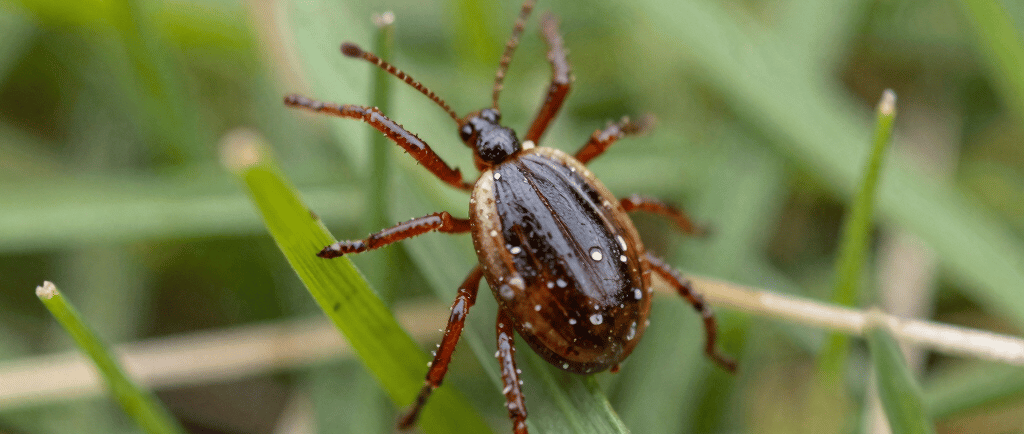
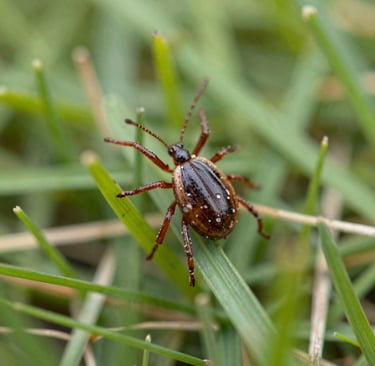
The Real Dangers of Ticks in Illinois (And Why They're Getting Worse)
Most people think of ticks as a minor annoyance — a seasonal nuisance you might pick up on a hike. But in Illinois, ticks are a growing public health threat, carrying multiple serious diseases that can affect your entire family, including your pets. Here's what North Shore residents need to know.
Illinois Has Three Dangerous Tick Species
A landmark University of Illinois study confirmed that all three major disease-carrying tick species are now present in virtually every Illinois county. The black-legged (deer) tick is most common in northern Illinois — including the Chicago North Shore — and is the primary carrier of Lyme disease. The lone star tick, expanding northward, spreads ehrlichiosis, tularemia, and the potentially fatal Heartland virus. The American dog tick carries Rocky Mountain spotted fever and Powassan virus.
Lyme Disease: The #1 Threat
Lyme disease is caused by the bacterium Borrelia burgdorferi, transmitted by infected deer ticks, and it's become a serious concern across northern Illinois. Approximately 43% of ticks collected in Illinois test positive for Lyme disease — with some counties, like Winnebago, registering rates as high as 71%. Between 2018 and 2022 alone, Illinois recorded over 1,700 human Lyme disease infections, and experts say cases are still rising.
Symptoms typically appear 48–72 hours after a tick attaches and include fever, headache, fatigue, muscle and joint pain, and the characteristic bull's-eye rash. If left untreated, Lyme disease can progress to severe neurological and cardiac complications.
Beyond Lyme: Other Tick-Borne Diseases
Ehrlichiosis is a bacterial illness that impacts white blood cells and immune function, with cases rising rapidly in Illinois after a new tick-borne pathogen (Ehrlichia muris eauclairensis) was discovered in a blacklegged tick by the Lake County Health Department in October 2024 — right in our backyard. Alpha-gal syndrome, triggered by lone star tick bites, causes a potentially life-threatening allergic reaction to red meat. Powassan virus, though rare, can cause encephalitis and has no specific treatment.
The "Tick Invasion" Is Real
Medical entomologist Patrick Irwin of the Northwest Mosquito Abatement District put it plainly: "We're sort of on the edge of an invasion." Deer populations fuel the problem — providing a blood meal that enables ticks to produce far more eggs and dramatically expand their range. Tick counts in many North Shore surveillance zones have risen sharply over just the past four years.
Ticks are active whenever temperatures are above freezing — which means April through October are peak exposure months in Illinois, but risk never fully disappears. They hide in tall grass, leaf piles, wooded edges, and low-hanging vegetation — exactly the kinds of landscapes common on North Shore residential properties.
Protect Your Family
Do daily tick checks, especially on children and pets after outdoor play
Keep grass mowed short and remove leaf litter from yard edges
Wear long sleeves and DEET-based repellent in wooded areas
Use wood chips or rocks to create a buffer zone between lawns and wooded areas
Consider professional tick barrier treatments to reduce yard populations
Professional tick control reduces tick abundance in treated yards by up to 63%. At Evergreen Organic Mosquito Control, we offer tick protection as part of our organic yard treatment programs — keeping your Lincolnshire, Lake Forest, or Glenview property safer all season long.
Get in Touch
Copyright © 2026 Evergreen Organic Lawn Care & Mosquito Control Inc. All Rights Reserved.
Based in Lincolnshire, IL
Serving the Chicago North Shore from Evanston to Lake Bluff
Our Services
Natural Tick Control
Quick Links
Evergreen Organic Mosquito Control
Natural Perimeter Pest Control
Natural Deer Repellent
Natural Rabbitt Repellent